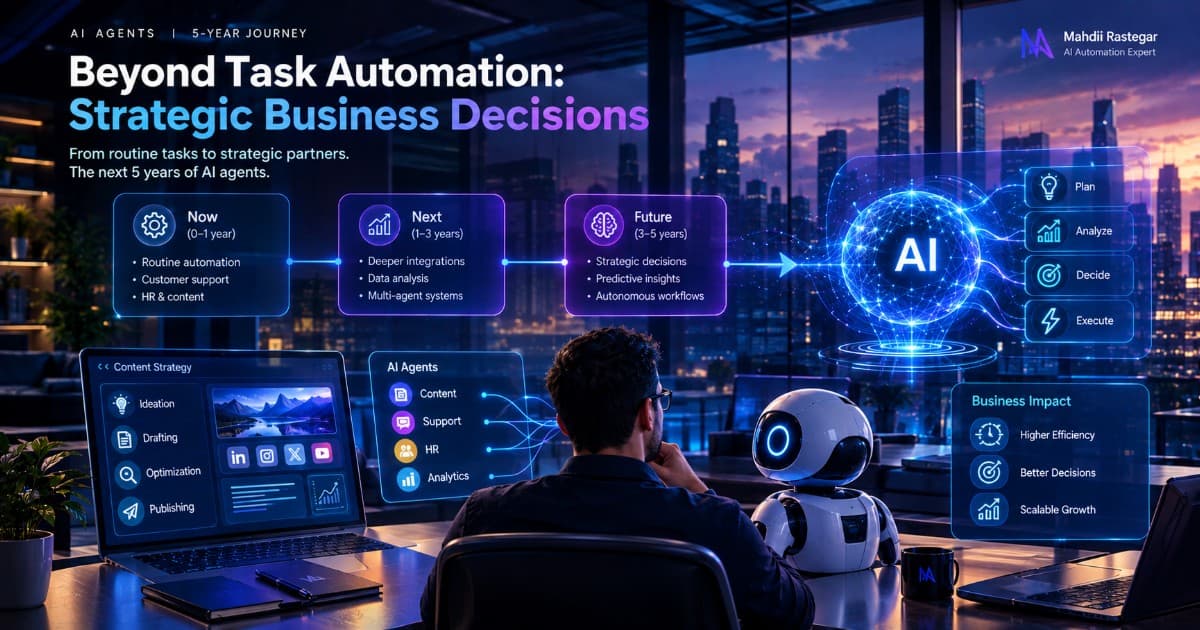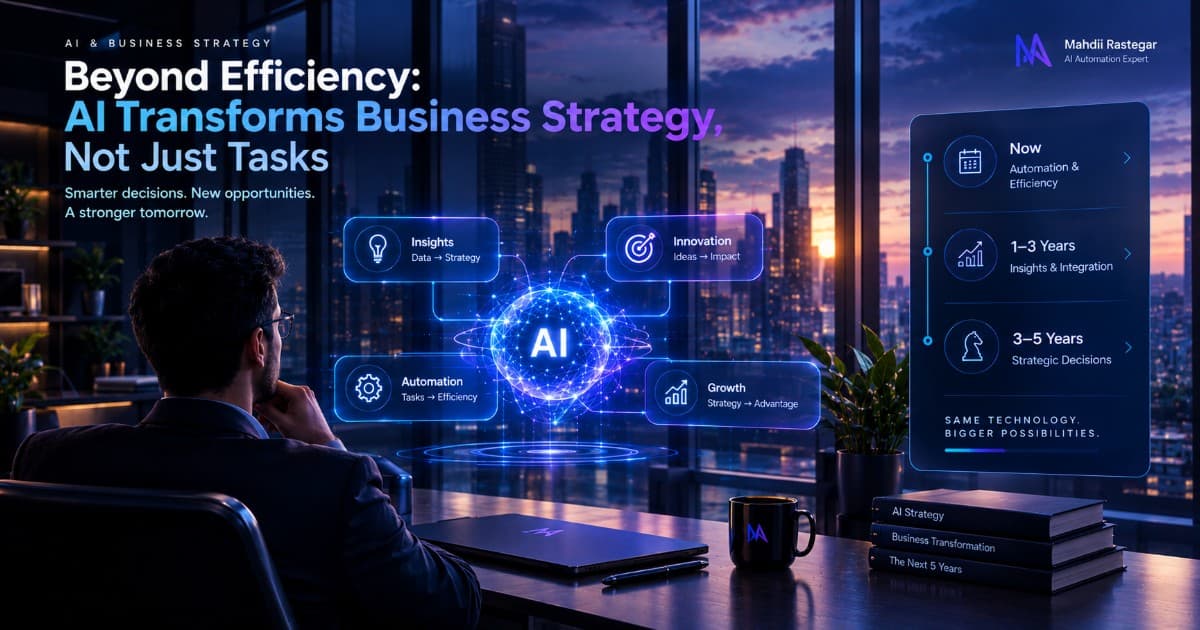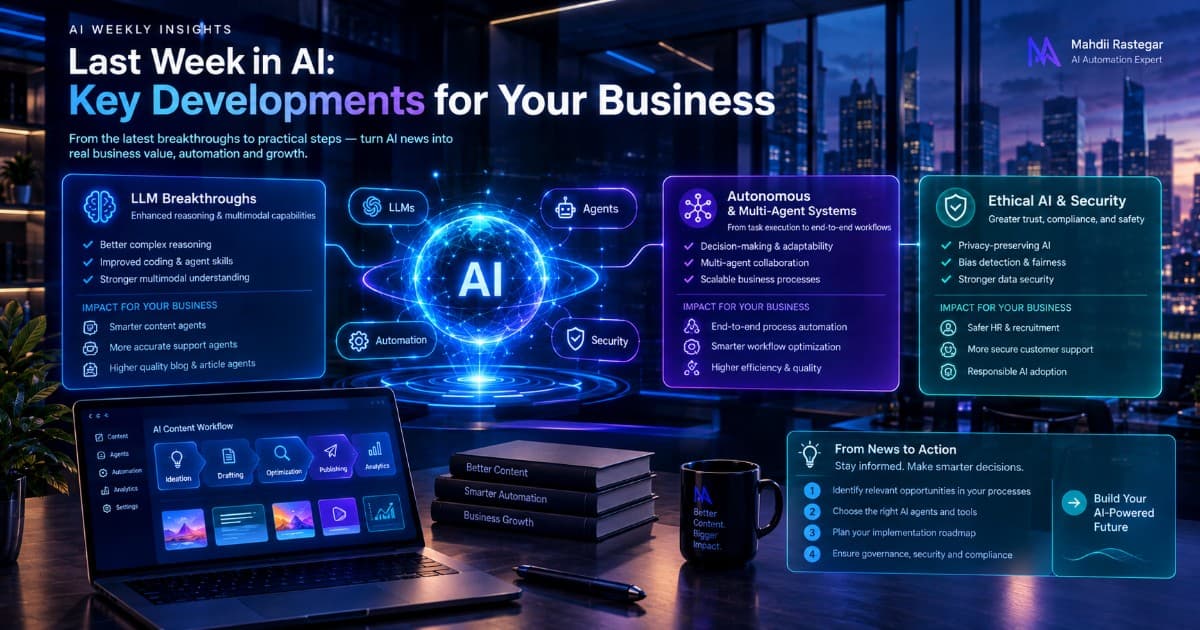
The integration of artificial intelligence into business operations is no longer a futuristic concept; it's a present-day reality transforming how companies interact with customers, manage internal processes, and generate content. As businesses explore automation solutions, a common point of confusion arises: the distinction between an AI agent vs chatbot. While both leverage AI to some extent and aim to streamline interactions, their underlying capabilities, complexity, and potential impact on your business goals differ significantly. This article clarifies these distinctions, offering guidance to business owners, executives, and department heads on selecting the right automation solution for their specific needs.
Defining Chatbots: Rule-Based Simplicity for Direct Interactions
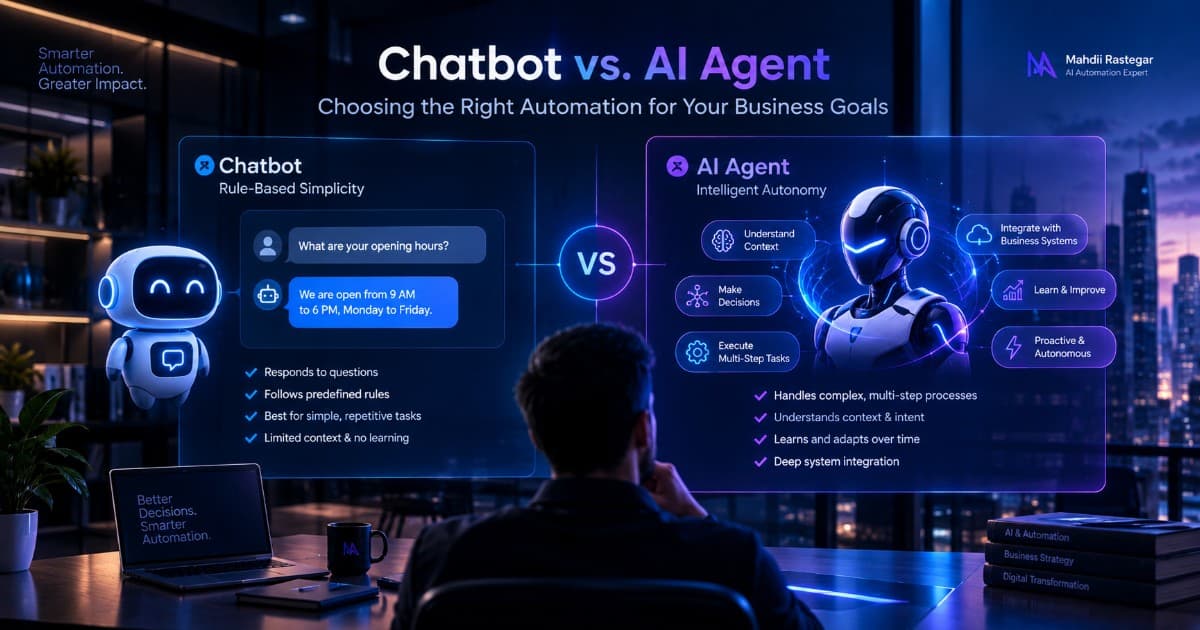
A chatbot is a program designed to simulate human conversation, typically using pre-programmed rules and scripts [3, 5]. At its core, a chatbot is a reactive tool: it responds when asked a question, handling specific requests like "What are your hours?" or addressing frequently asked questions (FAQs)2.
Chatbots generally work by recognizing keywords and following decision trees to provide fixed responses5. This rule-based approach means they operate within clearly defined conversational paths4.
Typical applications for chatbots include:
- Answering frequently asked questions (FAQs) [5, 7].
- Basic information retrieval on websites or apps.
- Simple lead qualification, such as collecting contact details5.
- Transactional tasks like checking an order status [5, 7].
Despite their utility for straightforward interactions, chatbots have inherent limitations. They often lack true contextual understanding, struggling with queries that deviate from their programmed scripts [4, 6]. Their interactions can feel rigid, as users must follow predefined conversation paths, making the experience feel robotic4. Furthermore, rule-based chatbots cannot learn or adapt over time and require constant manual updates for new scenarios or business changes [6, 7]. They are not scalable for enterprise needs, as managing them across thousands of conversations or multiple teams becomes inefficient [4, 5].
Defining AI Agents: Intelligent Autonomy for Complex Operations
In contrast to chatbots, an AI agent is a sophisticated software entity capable of understanding context, learning from interactions, making decisions, and executing tasks autonomously3. AI agents are proactive, working independently in the background to complete multi-step tasks without constant human direction2.
AI agents leverage advanced technologies such as natural language processing (NLP), machine learning (ML), and deep integration with enterprise systems. They often access external knowledge bases and real-time data to enhance their capabilities [3, 9]. This allows them to manage nuanced conversations, multi-step workflows, and decision-making that might have previously seemed too complicated for AI1.
Their advanced capabilities include:
- Contextual awareness: Understanding the nuances of a conversation or situation beyond keywords.
- Proactive problem-solving: Initiating actions or suggesting solutions without direct prompts2.
- Multi-step process execution: Handling complex workflows that span several stages and systems [8, 12].
- Continuous improvement through learning: Adapting and refining their performance over time using feedback loops9.
- Handling complex requests: Addressing ambiguous queries and dynamic situations.
- Integrating with diverse systems: Connecting deeply with CRM, ERP, HRIS, and other business platforms3.
Examples of specialized AI agents demonstrate their versatility:
- AI Support Agents can handle complex customer inquiries, troubleshoot issues, and manage service requests by connecting to existing systems and organizational knowledge.
- AI Content Agents can manage the entire content production process, from ideation and writing to publishing and brand alignment across channels.
- AI HR Agents can answer employee questions, manage leave requests, and streamline onboarding processes by integrating with HR knowledge and systems.
- AI Recruitment Agents can define hiring requirements, screen resumes, schedule interviews, and evaluate candidates against structured criteria.
- AI Personal Assistants can manage tasks, provide insights, and execute actions based on individual context and preferences.
- Multi-Agent Systems deploy specialized agents that work sequentially or in parallel on complex processes, reviewing each other's output and handing off to humans at defined points.
AI agents are like experienced employees who confidently handle problems end-to-end, whereas chatbots are more akin to trainees who need supervision for complex tasks1.
Chatbot vs. AI Agent: A Direct Comparison of Operational Capabilities
The fundamental difference between an AI agent and a chatbot lies in their autonomy and ability to make independent decisions1. This distinction profoundly impacts their operational capabilities across various dimensions:
- Task Complexity
- Chatbot: Designed for simple, repetitive queries and transactional tasks [5, 7]. They excel at providing quick, predefined answers.
- AI Agent: Capable of managing multi-step processes, performing data analysis, making decisions, and executing complex, end-to-end tasks [1, 2, 8, 12]. For example, where a chatbot might define a sales territory, an AI agent prioritizes regional prospects for the day and drafts outreach emails3.
- Contextual Understanding
- Chatbot: Relies on keyword-based matching and predefined scripts5. It struggles with ambiguity and rarely retains context across multiple turns in a conversation [4, 6].
- AI Agent: Leverages deep natural language understanding (NLU), memory, and intent recognition to comprehend the full context of an interaction, adapt to evolving conversations, and even proactively reach out to customers with timely, personalized alerts [3, 8].
- Learning and Adaptation
- Chatbot: Static and rule-bound, unable to learn or improve over time without manual updates [6, 7]. Its responses remain consistent regardless of past interactions.
- AI Agent: Designed for continuous learning, adaptation, and improvement through machine learning and feedback loops9. It can leverage real-time data and external tools to enhance its capabilities, ensuring operations can scale effectively9.
- System Integration
- Chatbot: Typically has limited or superficial integration with other business systems, often acting as a standalone conversational interface.
- AI Agent: Features deep, bi-directional integration with CRM, ERP, HRIS, and other business systems [3, 8]. AI agents connect directly to company data, assess incoming requests, and complete tasks without requiring manual intervention3. They can coordinate across multiple functional systems to streamline complex workflows, shrinking process time from weeks to days, eliminating manual handoffs, and improving audit trails10.
- Proactivity and Autonomy
- Chatbot: Primarily reactive, responding only when prompted by a user2. It needs direction to perform actions1.
- AI Agent: Proactive and goal-driven, capable of autonomous decision-making and task execution [1, 2, 10]. For instance, AI agents can automatically log sales activities in a CRM, score leads, and trigger follow-up workflows without anyone asking them to2. They can also conduct underwriting assessments or onboard new team members autonomously [3, 8].
- Implementation and Maintenance
- Chatbot: Offers a simple setup with no need for advanced AI training, making them easy to deploy and cost-effective for basic needs4.
- AI Agent: Requires a more robust setup and ongoing maintenance due to its complexity and deep integrations9. However, this initial investment yields scalable and impactful deployment over time.
When a Chatbot is the Right Choice for Your Business Goals
While AI agents offer advanced capabilities, there are clear scenarios where a chatbot is a sufficient and cost-effective solution. Businesses should consider a chatbot when their automation needs are focused on:
- High-volume, repetitive customer inquiries: For example, answering questions like "What are your opening hours?" or "How do I reset my password?" [5, 7].
- Simple informational requests: Providing quick answers to common questions on a website or app.
- Basic lead qualification: Collecting initial contact details or directing users to the right department.
- Initial customer touchpoints: Filtering and directing queries to the appropriate resources, potentially handing off to a human or a more advanced system for complex issues.
For example, a small e-commerce site looking to automate answers to common shipping and return policy questions would find a chatbot to be an ideal, straightforward solution. Rule-based chatbots provide quick and accurate answers for similar customer questions5.
When an AI Agent Unlocks Deeper Business Value and Transformation
For businesses aiming for significant impact, deep integration, and the automation of complex, context-rich processes, AI agents are necessary. They move beyond basic automation to provide strategic advantages11.
AI agents excel in scenarios requiring:
- Complex Customer Support: Going beyond FAQs to troubleshoot issues, handle order modifications, manage service requests, and personalize interactions. This is where solutions like Mahdii's AI Support Agents shine, connecting to existing systems and organizational knowledge to provide comprehensive assistance.
- Content Creation & Management: From ideation and writing to SEO optimization, publishing, and ensuring brand alignment across multiple channels. Mahdii's AI Content Agents and AI Blog & Article Agents are designed for this, managing the entire content lifecycle.
- HR and Recruitment: Automating routine employee queries, managing leave requests, onboarding new staff, screening candidates, and scheduling interviews. Mahdii's AI HR Agents and AI Recruitment Agents connect to HR knowledge and systems to handle these tasks efficiently.
- Business Process Automation: Streamlining workflows across departments, automating data entry, managing requests, and integrating multiple systems. This includes areas like Mahdii's Business Process Automation and AI Workflow Automation, where AI sits in the core logic to choose the next steps based on data. For instance, in supply chain operations, AI can anticipate stockouts based on live demand data and automatically trigger replenishment13.
- Personalized Assistance: Managing tasks, providing insights, and executing actions based on an individual's context and preferences, acting as a personal "second brain." Mahdii's AI Personal Assistants offer this level of tailored support.
AI agents are better equipped to handle evolving and increasingly complex tasks, ensuring operations can scale effectively9. They offer intelligence, adaptability, and contextual reasoning that drive strategic advantage11. In fact, AI agents are already being adopted in 79% of companies, with 88% of knowledge in support operations involving AI1.
Making the Right Choice: Key Considerations for Implementation
Deciding between a chatbot and an AI agent, or even how to combine them, requires careful consideration of your business's specific context.
- Define Your Objectives: Clearly articulate what you want to achieve. Are you looking to reduce support costs, improve content output, streamline HR, or enhance customer satisfaction?
- Assess Process Complexity: Evaluate the depth, variability, and number of steps involved in the tasks you wish to automate. Simple, repetitive tasks lean towards chatbots; complex, multi-step processes require AI agents.
- Data Availability and Quality: Consider the data an agent would need to learn and operate effectively. AI agents thrive on rich, integrated data.
- Integration Needs: Determine how critical seamless integration with existing CRM, ERP, HRIS, or content management systems is. AI agents offer deep, bi-directional integration capabilities.
- Scalability Requirements: Plan for future growth and how the chosen solution can adapt to increasing demands and evolving business needs. AI agents are built for scalability9.
- Human-in-the-Loop Strategy: Plan for when human intervention is necessary. Both solutions should have a clear mechanism for handing off complex or sensitive cases to a human operator.
Moving Beyond Basic Automation: The Strategic Advantage of AI Agents
While chatbots serve specific, narrow functions by providing reactive, rule-based responses, AI agents offer a paradigm shift in operational efficiency and strategic capability. They are goal-driven, context-aware, adaptive, and autonomous10. The choice between an AI agent and a chatbot hinges on the complexity of the problem you aim to solve and the desired level of automation and intelligence.
For businesses aiming for deep integration, continuous improvement, and the automation of complex, context-rich processes, AI agents represent the future of intelligent automation. They empower organizations to make management more proactive through AI-powered workflows that deliver real-time recommendations13. It's also worth noting that most enterprise automation strategies benefit from deploying both, with chatbots handling conversational access points and AI agents driving the autonomous workflows behind them14. The best solution often combines AI automation to execute tasks reliably and AI agents to analyze data, make decisions, and optimize processes11.
If your business is ready to move beyond basic automation and leverage intelligent AI agents to transform your operations, we invite you to explore the possibilities. Contact us today to discuss your specific business challenges and discover how tailored AI implementations can drive your success.