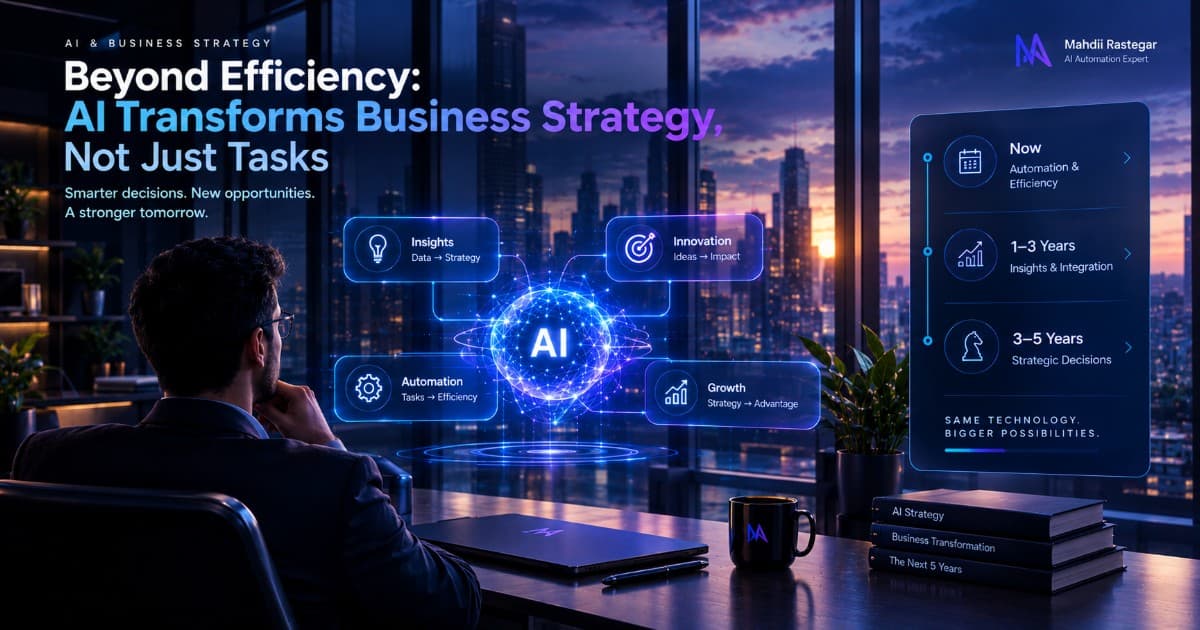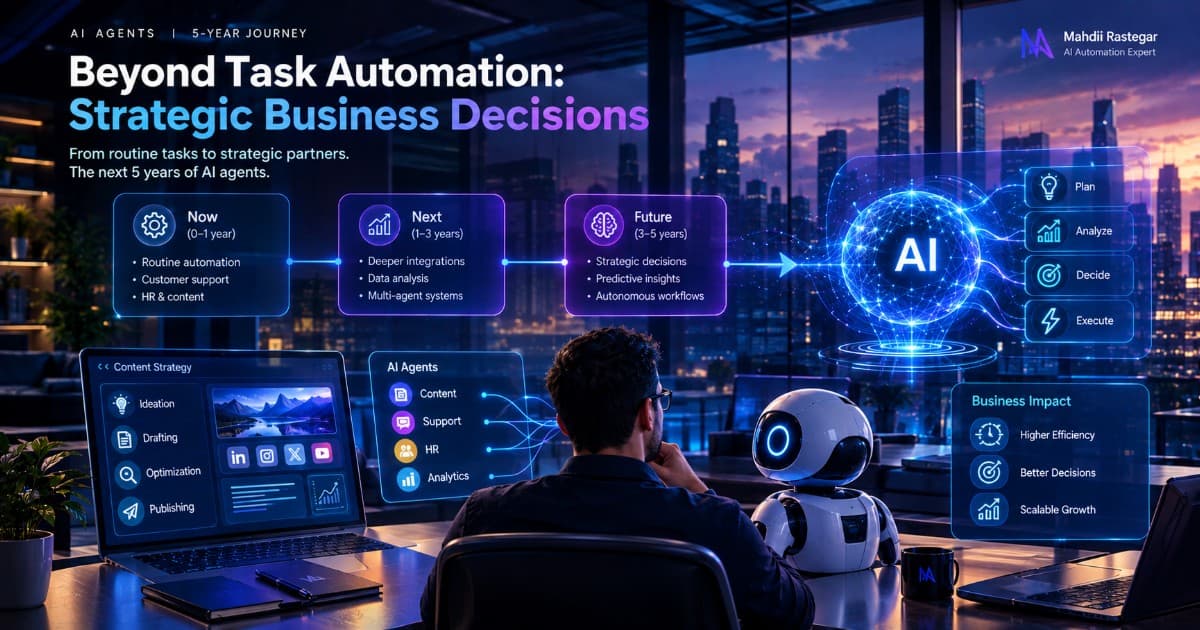
Intelligent AI Agents are evolving rapidly, moving beyond simple automation to become integral components of strategic business operations. These systems are designed to automate tasks, interact with humans and other systems, and ultimately enhance decision-making processes. While they currently excel at routine automation, such as managing customer inquiries or handling HR requests, their capabilities are expanding. Over the next five years, AI Agents will transition from merely executing tasks to actively contributing to strategic insights, redefining human roles, and shaping the future of work. This article explores that evolution, from their present applications to their projected impact on strategic business decisions.
The Present Landscape: AI Agents Excelling in Routine Automation (Years 0-1)
Today's AI Agents primarily handle repetitive, rule-based tasks, freeing human staff from mundane work and improving operational efficiency. The market for autonomous agents is experiencing significant growth, with searches for "AI agents for business," "autonomous AI agents," "AI workflow automation," and "agentic AI systems" having skyrocketed1. The global autonomous agents market, valued at $4.35 billion in 2025, is forecasted to reach $103.28 billion by 2034, accelerating at a compound annual growth rate of 42.19%6.
Current applications demonstrate their effectiveness in specific domains:
- AI Support Agents: These agents automate frequently asked questions, check order statuses, create support tickets, and connect to existing customer relationship management (CRM) systems. For instance, a 24/7 AI Agent customer service solution can integrate with platforms like Shopify, Zendesk, and WhatsApp Business to handle order tracking, product recommendations, and returns processing, escalating complex issues to human operators when necessary3.
- AI HR Agents: Handling employee questions, managing leave requests, providing benefits information, and streamlining onboarding processes are common tasks for these agents. They connect to HR knowledge bases and systems to deliver consistent and timely information.
- AI Content Agents: These systems streamline the content creation process, from ideation and writing to scheduling and publishing content across social media channels, ensuring brand voice consistency.
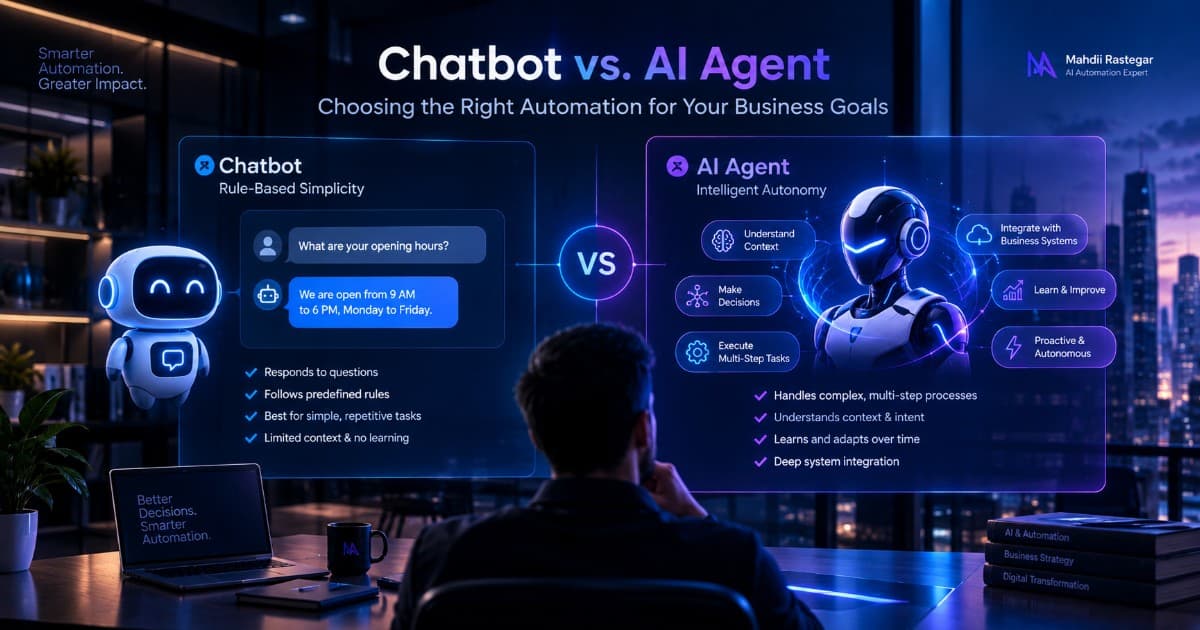
These agents are distinct from traditional chatbots, possessing autonomy, multi-step reasoning, and execution capabilities that allow them to perform more complex actions3. Gartner predicts that by 2026, 40% of enterprise applications will feature task-specific AI Agents, a significant increase from less than 5% in 20252. This widespread adoption underscores their current value in improving efficiency and response times by automating routine operations.
The Near Future: AI Agents as Proactive Data Analysts and Integrators (Years 1-3)
Looking ahead to the next one to three years, AI Agents will evolve to integrate more deeply with diverse business systems and data sources. Their role will expand beyond simple rule-following to analyzing complex data patterns and identifying trends. Enterprise AI Agents are already advancing towards greater autonomy and sophistication, featuring enhanced cognitive capabilities, improved natural language processing, and more sophisticated decision-making algorithms4. This evolution will empower agents to handle increasingly complex tasks and make more nuanced decisions4.
A key development will be the rise of Multi-Agent Systems, where specialized agents work in concert. These systems will review each other's outputs and collaborate to tackle complex, multi-stage processes that a single agent cannot manage alone. Gartner forecasts that by 2027, one-third of agentic AI implementations will involve combining agents with different skills to manage complex tasks within application and data environments2. This often involves an "AI orchestrator" — a larger model that coordinates smaller, specialized models for constrained tasks9.
AI Agents will also begin to offer early decision support. They will move beyond executing predefined steps to generating preliminary insights and suggesting actionable recommendations based on their analysis. For example, an AI Agent could identify a dip in customer satisfaction by analyzing support interactions and sales data, then suggest potential marketing adjustments or product feedback loops. Another example is an AI Agent designed for lead qualification and automated nurturing, which integrates with CRM platforms, LinkedIn Sales Navigator, and email to perform profile enrichment, adaptive qualifying questions, automatic scoring, meeting scheduling, and personalized nurture sequences3. These capabilities indicate a clear trajectory for AI Agent advancement in the short-term horizon (2024–2027)4.
The Mid-Term Horizon: AI Agents Driving Strategic Business Decisions (Years 3-5)
Over the next three to five years, AI Agents are poised to become integral to higher-level strategic planning and execution. This period marks a significant shift from reactive automation to truly autonomous decision-making8.
- Scenario Planning and Risk Assessment: AI Agents will gain the ability to simulate outcomes, assess risks, and evaluate various strategic options based on comprehensive data analysis. For instance, a healthcare AI Agent could continuously learn and anticipate medical risks, refine treatments based on causal relationships, and autonomously adjust care plans8. Similarly, an AI Agent in logistics could continuously learn and predict supply chain disruptions, identify root causes of delays, and autonomously reroute shipments8.
- Optimizing Business Processes: With advanced AI Workflow Automation, agents will dynamically adapt workflows, making real-time decisions on next steps based on evolving data and results. Agentic AI can automate parts of complex, high-value workflows in areas like demand sensing and forecasting, hyper-personalization, product design, finance, HR, IT, tax, and internal audit7.
- Reporting Automation: AI Agents will unify disparate data sources, generate sophisticated reports, and deliver critical management insights autonomously. This goes beyond simple data aggregation to trend analysis and predictive insights, allowing for continuous monitoring to track adoption and performance, fix errors quickly, and build stakeholder trust7.
Consider an AI Agent analyzing market shifts, competitor strategies, and internal performance to recommend new product development areas or market entry strategies. Another agent might optimize supply chain logistics by predicting demand fluctuations and suggesting real-time adjustments. These capabilities are why Gartner forecasts that by 2027, 60% of enterprises will deploy AI Agents to automate workflows and support decision-making1, and that over 60% of global companies will use them in daily operations1. By 2027+, AI Agents are expected to become "table stakes" rather than a differentiator in the business landscape3.
Redefining Human Roles: Collaboration, Oversight, and Strategic Focus
As AI Agents take on more complex tasks, human responsibilities will shift significantly. The future of human-machine partnership involves a redefinition of roles, moving away from task execution towards oversight and strategic collaboration4.
- From Execution to Oversight: Humans will transition from performing routine tasks to supervising AI Agent operations. This includes ensuring accuracy, validating outcomes, and maintaining ethical compliance. The need for human intervention remains crucial, particularly when processes become more complex or encounter edge cases9.
- Strategic Collaboration: A new partnership will emerge where humans provide the essential context, ethical guidance, and high-level strategic direction. In turn, AI Agents will provide data-driven insights, perform complex analyses, and execute tasks with speed and precision. This synergy allows humans to focus on higher-value activities that require creativity, critical thinking, and empathy.
- Upskilling and New Competencies: To thrive in this evolving environment, employees will need to develop new skills. AI literacy, critical thinking, data interpretation, and strategic decision-making will become paramount. Understanding how to interact with, guide, and leverage AI Agents will be essential for maximizing their potential and ensuring successful outcomes.
Challenges and Ethical Considerations in Advanced AI Agent Deployment
Implementing and scaling advanced AI Agents for strategic decision-making comes with its own set of challenges and ethical considerations. Addressing these proactively is crucial for successful deployment.
- Data Quality and Bias: AI Agents are only as good as the data they are trained on. Ensuring clean, unbiased, and comprehensive data is an ongoing necessity to guarantee fair and accurate AI decisions. Poor data quality can lead to flawed insights and biased outcomes.
- Explainability and Transparency: In strategic contexts, understanding how AI Agents arrive at their decisions is paramount. Businesses must be able to explain the logic and data points behind an AI Agent's recommendations. This addresses a common question: "Can your organization explain how the AI reaches specific conclusions?" and ensures that "decision pathways are documented and accessible for review." Investing in AI transparency and interpretability tools is essential for auditing requirements and building stakeholder confidence in AI-driven decisions6.
- Security and Governance: With AI Agents handling sensitive business data and making critical decisions, robust security measures and clear governance frameworks are indispensable. This includes protecting data privacy, preventing unauthorized access, and establishing protocols for accountability. Another key consideration is whether "end-users understand when they're interacting with an AI agent versus a human," which impacts trust and user experience.
- Integration Complexities: Integrating new AI Agent systems with existing legacy infrastructure can be technically challenging. Ensuring seamless data flow, interoperability, and avoiding vendor lock-in are critical concerns. Organizations risk becoming overly dependent on specific AI vendors or platforms, potentially limiting future flexibility and increasing costs due to the rapid evolution of AI technologies6. Building AI Agents that can autonomously handle complex decision-making will require significant advancements in contextual reasoning and rigorous testing for edge cases9.
Preparing Your Business for the Next Wave of AI Agent Evolution
To leverage the strategic potential of AI Agents, businesses should take proactive steps now. The period between 2025 and 2026 is considered an optimal moment for AI Agent adoption due to maturing technology and low competition3. Leaders are no longer asking if they need AI, but how to implement it effectively, integrate it with existing systems, and avoid pitfalls1.
- Start with clear objectives: Define specific business problems that AI Agents can solve beyond simple automation. Focus on high-value areas where intelligent automation can yield significant strategic advantages.
- Invest in data infrastructure: Ensure your data is accessible, clean, well-governed, and structured to support advanced AI analysis and decision-making.
- Pilot programs: Begin with targeted implementations to test and refine AI Agent capabilities within specific business units or processes. This iterative approach allows for learning and adaptation before broader deployment.
- Foster a culture of AI literacy: Educate employees on the potential of AI, how it works, and how to effectively collaborate with AI Agents. This helps build acceptance and prepares the workforce for new roles.
- Consider expert guidance: Engaging in Technical Consulting can provide a second look at your existing AI products or systems. This review can identify architectural weaknesses, workflow inefficiencies, performance issues, and potential risks, offering clear options for improvement and optimal integration of new AI Agent capabilities.
The Future is Collaborative: AI Agents as Your Strategic Partners
The trajectory of AI Agents is clear: they are rapidly moving beyond simple task execution to become indispensable strategic partners within businesses. This evolution promises enhanced efficiency, deeper insights, and faster, more informed decision-making. As AI Agents take on more complex analytical and decision-support roles, human potential will be redefined, allowing teams to focus on innovation, creativity, and high-level strategy.
Over the next five years, the transformative impact of intelligent AI Agents on business strategy will be profound. By 2027, AI Agents are predicted to be deeply integrated into daily operations, becoming a mandatory component rather than a competitive edge [1, 3]. The future is collaborative, and preparing your business now means embracing this evolution to shape a future where people can focus on meaningful decisions and bold ideas.
Consider how these evolving AI Agent capabilities can be tailored to your specific business challenges and strategic goals. Start a conversation today to explore potential solutions and begin shaping your AI-driven future.